
Founder
Founding Members Wanted — Limited Spots Available

Help shape the future of property management. Get a lifetime 25% discount, direct access to our dev team, your own Founding Member badge, and a real voice in what we build next.

Energy Performance Certificates

EPC Compliance, Simplified

EPC rules are changing. Whether you let residential or commercial properties, Rent Logger helps you understand the requirements, track your ratings, and stay ahead of the deadlines.

Important Information

Why EPC Compliance Matters

Energy Performance Certificates are a legal requirement for all rental properties in England and Wales. Scotland and Northern Ireland have their own EPC regulations — the rules on this page apply to England and Wales. Non-compliance can result in significant fines and an inability to legally let your property.

Up to £5,000 Fine

Residential landlords face fines of up to £5,000 per property for MEES breaches

Up to £150,000 Fine

Commercial landlords face penalties based on rateable value, up to £150,000 per property

Cannot Legally Let

You cannot let a property below the minimum EPC standard without a valid registered exemption

Residential Properties — Current Rules

The Minimum Energy Efficiency Standards (MEES) for residential properties in England and Wales currently require a minimum EPC rating of E.

Minimum EPC rating of E required for all tenancies

Properties rated F or G cannot be legally let without a registered exemption. In force since April 2020 for all existing tenancies.

Valid EPC must be provided before letting

Landlords must provide an EPC to prospective tenants free of charge before they enter into a tenancy agreement.

EPC must be displayed in property marketing

The EPC rating must be included in all property advertisements, whether online or in print.

EPCs are valid for 10 years

A new EPC is required when the certificate expires, or earlier if significant energy improvements have been made.

Fines of up to £5,000 per property

Local authorities can issue penalties for non-compliance with MEES regulations, including letting a sub-standard property or failing to register an exemption.

Cost cap of £3,500 for improvements

Landlords are currently expected to spend up to £3,500 (inc. VAT) on energy efficiency improvements. If spending this amount does not achieve a rating of E, an exemption can be registered.

Commercial Properties — Current Rules

Commercial (non-domestic) properties are also subject to MEES regulations, with notably higher penalties for non-compliance.

Minimum EPC rating of E for all commercial leases

Non-domestic properties rated F or G cannot be legally let. Applies to new leases and existing leases in England and Wales.

Fines of up to £150,000 for non-compliance

Penalties for commercial MEES breaches are significantly higher than residential, based on rateable value and duration of the breach.

Exemptions must be registered on the PRS Exemptions Register

Valid exemptions include cost cap, listed buildings, third-party consent refusal, and property devaluation.

EPCs valid for 10 years

Commercial EPCs use the same 10-year validity period as residential certificates.

What's Expected for Commercial

The UK government has signalled a move to minimum EPC B for commercial properties by 2030–2035, but formal regulations have not yet been published. Landlords should plan for tightening requirements.

Upcoming Changes

What's Changing by 2030

The UK government announced proposed changes to residential EPC requirements in England and Wales in January 2026 as part of its Warm Homes Plan. While legislation is still being finalised, these are the headline changes self-managing landlords should prepare for.

Minimum Rating Rises to C

Under proposals announced January 2026, all residential rental properties in England and Wales would need to achieve at least an EPC C rating by October 2030 — a significant step up from the current minimum of E.

Cost Cap Increases to £10,000

The maximum a landlord must spend on improvements rises from £3,500 to £10,000 per property. For properties valued under £100,000, the cap is 10% of property value.

Exemptions Extended to 10 Years

Valid exemptions will last 10 years (up from 5), and must still be registered on the PRS Exemptions Register.

New EPC Assessment Method

The Home Energy Model (HEM:EPC) will replace the current SAP system, assessing fabric performance, heating efficiency, and smart readiness.

Key Dates & Timeline

1 October 2025Now Active

Energy efficiency spending begins counting toward the new £10,000 cost cap

Late 2027

New Home Energy Model (HEM:EPC) launches alongside the existing SAP system

1 October 2029

HEM:EPC becomes compulsory for all new EPCs. Properties achieving EPC C under the old system before this date remain compliant until their certificate expires

1 October 2030

Under the proposed rules, all residential tenancies would need to meet EPC C or equivalent (old or new methodology), or hold a valid exemption

2030–2035 (expected)Subject to Confirmation

Commercial properties expected to require minimum EPC B — formal regulations not yet published

Residential vs Commercial — Quick Comparison

Residential
Commercial
Current MinimumEPC E (since April 2020)EPC E (since April 2023 for all leases)
2030 MinimumEPC C (proposed for October 2030)EPC B expected (not yet legislated)
Maximum Fine£5,000 per property£150,000 per property
Current Cost Cap£3,500 (proposed to rise to £10,000)No formal cost cap — based on 7-year payback test
Certificate Validity10 years10 years
Rating ScaleA (92+) to G (1–20)A to G (same scale)
How Rent Logger Helps

Stay on Top of EPC Compliance

Rent Logger gives self-managing landlords the tools to track, monitor, and act on EPC requirements across their entire portfolio.

Automatic EPC Downloads

Rent Logger automatically downloads your property's EPC data from the official EPC register, so you always have the latest certificate details without manual lookups.

Expiry Monitoring & Alerts

Get notified well before an EPC expires. Set your preferred reminder period so you have time to arrange a new assessment before marketing or re-letting.

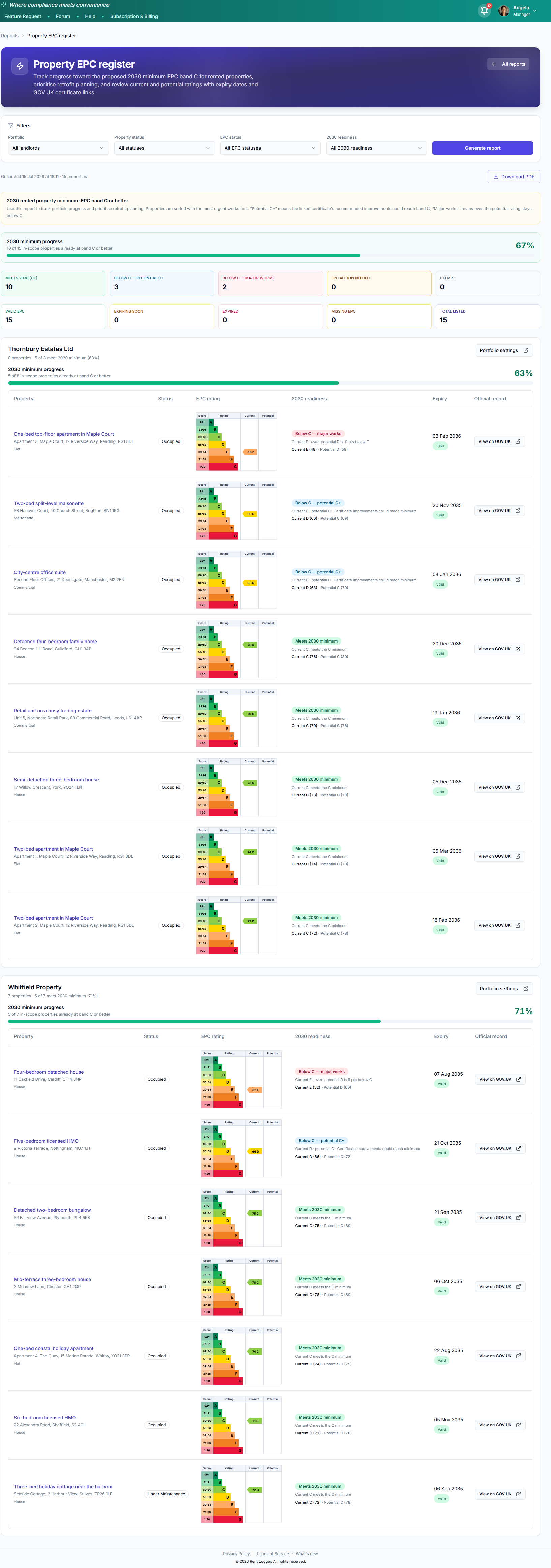
Rating Distribution Charts

See the EPC rating distribution across your entire portfolio at a glance. Instantly identify which properties are at risk of falling below the minimum standard.

Residential & Commercial Support

Whether your property is domestic or non-domestic, Rent Logger tracks the correct EPC type, displays the right rating scale, and applies the appropriate compliance rules.

Tenancy Onboarding Compliance

Landlords are legally required to provide a valid EPC to tenants before a tenancy agreement is signed — failure to do so can result in fines. Rent Logger's built-in tenant application and tenancy onboarding process displays the property's EPC details automatically, helping you meet this requirement as part of setting up every new tenancy.

Property-Level EPC Details

View every property's EPC rating, issue date, expiry date, floor area, and property type in one place — alongside all your other property records.

Configurable Certificate Types

EPC tracking is built in, but you can also create custom certificate types if your portfolio requires additional compliance monitoring.

Potential Rating Visibility

For residential properties, Rent Logger displays both the current and potential EPC rating, helping you prioritise which properties would benefit most from energy improvements.

See It in Action

Here's how Rent Logger displays EPC information for your properties — whether residential or commercial, current or expired.

Expired EPC — Residential Property

Clear warning banner alerts you immediately when an EPC has expired

Rent Logger showing an expired residential EPC with current rating D (64) and potential rating B (83), expiry date clearly flagged in red

Valid EPC — Commercial Property

Non-domestic properties show the commercial rating scale alongside certificate details

Rent Logger showing a valid commercial EPC with rating C (75), property type non-domestic, valid until 2034

Portfolio Analytics — Rating Distribution

See how your portfolio stacks up across all EPC ratings, including expired and exempt properties

EPC Ratings Distribution chart showing portfolio breakdown by rating with compliance information for residential and commercial lettings

What Should Self-Managing Landlords Do Now?

If Your Properties Are Already EPC C

  • Consider renewing your EPC before October 2029 to lock in compliance under the current SAP system for up to 10 years
  • Use Rent Logger's expiry monitoring to track when each certificate needs renewing
  • Monitor the HEM:EPC rollout (expected late 2027) as the new system may assess properties differently

If Your Properties Are Below EPC C

  • Start planning energy improvements now — spending from October 2025 counts toward the new £10,000 cost cap
  • Prioritise high-impact upgrades: loft insulation, cavity wall insulation, double glazing, LED lighting, and modern heating controls
  • Check eligibility for grants such as the Warm Homes: Local Grant, ECO4, and the Boiler Upgrade Scheme
  • Use Rent Logger's rating distribution chart to identify which properties need attention first

The information on this page covers England and Wales only. Scotland and Northern Ireland have separate EPC legislation. This content is provided for general guidance only and was accurate at the time of publication (March 2026). EPC regulations are subject to change, and some items described as "proposed" may not have been enacted into law. Always consult the latest government guidance or seek professional advice for your specific circumstances. Sources include GOV.UK MEES guidance, the Warm Homes Plan (January 2026), and official EPC Register data.

Ready to Get Your EPC Compliance in Order?

Rent Logger tracks every EPC across your portfolio, alerts you before they expire, and helps you stay ahead of changing regulations.